

Top 5 AGV Stacker Advantages for Modern Warehouses
Table of Contents
Introduction
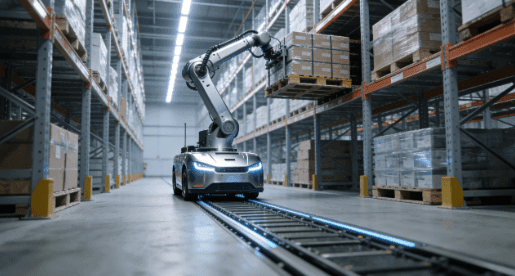
In today’s fast-paced logistics industry, efficiency and accuracy are critical for success. Warehouses face the challenge of handling high volumes of inventory while minimizing errors, delays, and labor costs. Traditional forklifts, while reliable, depend heavily on human operators and are limited in consistency, scalability, and safety.
Enter the AGV stacker—an automated guided vehicle specifically designed for pallet handling, lifting, and stacking. AGV stackers combine robotics, sensors, and software integration to automate repetitive tasks, reduce operational risks, and optimize warehouse performance.
In this blog, we will cover:
- The top 5 advantages of AGV stackers in modern warehouses
- How they reduce costs and improve safety
- Real-world applications across industries
- Market trends, adoption rates, and ROI data
- Technical insights, operational tips, and maintenance best practices
- Comparative analysis with traditional forklifts and AMRs
- Frequently asked questions addressing common adoption concerns
With AGV stackers, warehouses can not only increase throughput but also implement data-driven decision-making, laying the foundation for truly smart logistics operations.
1. Increased Operational Efficiency with AGV Stacker
Automated Material Handling
AGV stackers can autonomously move pallets between storage and production areas. By automating repetitive tasks, warehouses achieve:
- Faster order fulfillment
- Reduced human errors
- Consistent stacking and transport
Data Insight: According to Material Handling Institute (2022), facilities using AGV stackers improved throughput by 30–40% compared to manual handling.
Real-World Case: An e-commerce fulfillment center in Germany reported that after introducing 12 AGV stackers, they reduced order processing time from 45 minutes to 28 minutes per batch—a 38% efficiency gain.
Route Optimization and Consistency
AGV stackers follow programmed routes with high precision, ensuring:
- Consistent travel times
- Optimized routes for energy savings
- Minimal congestion in aisles
Technical Insight: Modern AGV stackers use LiDAR mapping and simultaneous localization and mapping (SLAM) technologies to dynamically adapt routes in complex warehouse layouts.
Integration with Warehouse Management Systems (WMS)
AGV stackers communicate with WMS software to:
- Update inventory in real-time
- Optimize storage allocation
- Schedule maintenance proactively
Industry Statistic: Logistics Tech Review (2023) found that warehouses integrating AGV stackers with WMS improved inventory accuracy by 15% and order fulfillment speed by 20%.
2. Enhanced Safety in Warehouses
Minimizing Human Error
Human-operated forklifts are prone to accidents caused by fatigue, distractions, or inexperience. AGV stackers eliminate these risks through:
- Automated navigation
- Collision detection
- Predictable, consistent operations
Example: A European distribution warehouse reduced collision incidents by 70% in one year after AGV stacker deployment.
Advanced Obstacle Detection
AGV stackers are equipped with:
- LiDAR sensors for distance measurement
- Ultrasonic sensors for detecting moving obstacles
- Camera systems for visual recognition
These technologies prevent collisions with personnel, forklifts, and inventory.
Safer Heavy Lifting Operations
Manual lifting of pallets can cause workplace injuries. AGV stackers automatically lift and stack pallets, reducing ergonomic strain and improving worker safety.
Expert Insight: Dr. Sandra Kim, a warehouse safety consultant, states:
“Integrating AGV stackers drastically reduces workplace injuries and improves overall employee safety metrics.”
3. Cost Savings and Return on Investment (ROI)
Labor Cost Reduction
AGV stackers reduce reliance on human operators. For instance:
- One operator can monitor 3–5 AGV stackers simultaneously
- Reduced need for overtime labor in peak seasons
- Savings on training and human resource costs
ROI Case Study: A medium-sized warehouse saved $250,000 annually in labor costs after adopting 10 AGV stackers.
Energy Efficiency
AGV stackers are typically electric-powered, consuming 50–70% less energy than diesel forklifts. They also have regenerative braking systems to recover energy during operation.
Environmental Insight: Switching to AGV stackers contributes to lower carbon emissions, supporting corporate sustainability goals.
Maintenance and Downtime Reduction
AGV stackers utilize predictive maintenance, where sensors monitor motor performance, battery health, and mechanical wear, preventing unexpected downtime.
Data Insight: Predictive maintenance reduced unplanned downtime by 25–30%, according to Warehouse Automation Insights (2023).
4. Scalability and Flexibility
Easy Integration with Existing Layouts
AGV stackers do not require major warehouse modifications. They can be deployed in retrofitted warehouses and integrated with existing WMS systems.
Adaptable Routes and Expansion
As warehouses grow or seasonal demand fluctuates:
- AGV stackers can be reprogrammed to follow new routes
- Additional units can be added seamlessly without disrupting operations
Market Insight: AGV adoption in North American warehouses has increased 12% annually, reflecting demand for flexible, scalable automation solutions.
Modular Design for Future Growth
Most AGV stackers are modular, allowing for:
- Expansion of lifting capacity
- Integration of additional sensors or payload options
- Upgradeable software for advanced analytics
5. Data-Driven Operations
Real-Time Inventory Tracking
AGV stackers communicate continuously with WMS, updating:
- Pallet positions
- Stock levels
- Order fulfillment status
This improves accuracy, reduces missing items, and accelerates shipping.
Performance Analytics
Operators can monitor:
- Travel efficiency
- Idle and utilization time
- Battery consumption
- Stacking accuracy
These insights support continuous improvement initiatives and better workforce allocation.
Predictive Maintenance
Sensors detect abnormal vibration, motor strain, or battery degradation. Alerts allow technicians to schedule maintenance before a failure occurs, reducing costly downtime.
Specialized Real-World Applications
E-Commerce Fulfillment
High-volume SKU handling requires speed and precision. AGV stackers operate 24/7, managing large orders with minimal human intervention.
Automotive Supply Chains
Heavy parts and assembly components are efficiently moved with precision, reducing delays and errors.
Cold Storage Logistics
Electric AGV stackers maintain reliable operation in refrigerated environments, where manual labor may be limited due to extreme conditions.
Pharmaceutical Warehouses
AGV stackers ensure controlled handling of sensitive materials while maintaining compliance with regulatory standards.
Industry Trends and Market Insights
The AGV stacker market is evolving rapidly, driven by technological innovation, changing warehouse demands, and the global push for automation. Understanding these trends is essential for warehouse operators, logistics managers, and investors looking to optimize operations and make informed decisions.
Global Market Size and Growth
The global AGV market, including stackers, forklifts, and other automated guided vehicles, is projected to reach $7.5 billion by 2030, growing at a CAGR of 11.6% from 2024 to 2030. Within this, AGV stackers are one of the fastest-growing segments due to their adoption in e-commerce fulfillment, cold storage, and manufacturing logistics.
Regional Insights:
- North America: Leading in AGV adoption due to advanced warehouse automation and labor cost pressures.
- Europe: Focused on sustainability, with electric AGV stackers replacing diesel forklifts in urban logistics hubs.
- Asia-Pacific: E-commerce growth and high-volume manufacturing in China, Japan, and South Korea drive AGV stacker demand.
Case Study: A logistics operator in Germany implemented 50 AGV stackers in its e-commerce warehouse and increased throughput by 35%, achieving ROI within 20 months.
Technology Trends
Modern AGV stackers are no longer simple automated forklifts—they are intelligent systems integrating:
- AI Navigation: Machine learning algorithms enable optimal routing, obstacle avoidance, and traffic flow management within warehouses.
- Vision-Based Guidance: Cameras and sensors allow stackers to recognize pallets, shelves, and dynamic obstacles, enhancing precision.
- IoT Connectivity: AGV stackers communicate with WMS, ERP systems, and other AGVs for real-time tracking, predictive maintenance, and fleet management.
Expert Insight: According to Logistics Tech Review (2023), warehouses implementing AI-powered AGV stackers reduced idle time by 18% and improved energy efficiency by 12%.
Sustainability and Green Logistics
Electric AGV stackers are replacing diesel or gas-powered forklifts, contributing to:
- Lower Carbon Emissions: Reducing warehouse carbon footprint by up to 30–40% compared to conventional vehicles.
- Energy Efficiency: Regenerative braking systems and smart charging minimize electricity consumption.
- Eco-Friendly Materials: Manufacturers are increasingly using recyclable or biodegradable components in AGV stackers.
Trend Insight: European warehouses adopting electric AGV stackers are aligning with the EU Green Deal, supporting net-zero emissions targets by 2050.
Adoption Drivers
Several key factors are accelerating AGV stacker adoption globally:
- Labor Shortages: Rising labor costs and a shrinking workforce push companies toward automation.
- E-Commerce Growth: High-volume, high-speed warehouses require 24/7 operations that manual labor cannot sustain.
- Operational Efficiency: AGV stackers streamline material handling, reduce human error, and enable real-time analytics.
- Safety Compliance: Increasing regulations and a focus on workplace safety make automation a strategic necessity.
Statistic: A 2022 survey by Warehouse Automation Insights revealed that 65% of warehouse operators plan to increase AGV stacker investments in the next three years to meet operational and safety goals.
Competitive Landscape
Key factors influencing the competitive landscape for AGV stackers include:
- Technology Differentiation: Companies integrating AI, IoT, and vision-based guidance lead the market.
- Customization: Stackers capable of handling various pallet sizes, weights, and warehouse layouts are in high demand.
- After-Sales Service: Predictive maintenance, remote monitoring, and training programs drive customer satisfaction and adoption.
Market Insight Table:
| Metric | Value / Trend | Insight |
|---|---|---|
| Global AGV Market Size 2030 | $7.5 billion | Strong growth potential |
| CAGR (2024–2030) | 11.6% | High adoption rate |
| E-commerce Warehouse Adoption | 48% of new AGV stackers | Fastest-growing segment |
| Energy Efficiency Improvement | 12–15% with AI & IoT-enabled stackers | Reduced operational cost |
| Safety Incident Reduction | Up to 70% fewer accidents in automated warehouses | Safety-driven adoption |
| ROI Timeline | 18–24 months | Economically viable for mid-sized warehouses |
Emerging Innovations
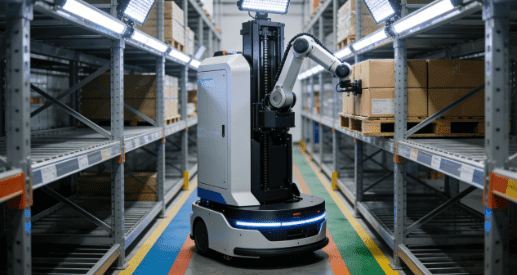
- Fleet Management Software: Enables centralized control of multiple AGV stackers, route optimization, and predictive maintenance across large warehouses.
- Autonomous Charging Stations: Stackers autonomously dock for charging, eliminating downtime and reducing manual intervention.
- Hybrid AGV-AMR Models: Combining fixed-path efficiency of AGVs with flexible navigation of AMRs for complex environments.
Expert Forecast: International Journal of Logistics Automation (2023) predicts that by 2028, over 70% of warehouses in developed regions will deploy at least one AGV stacker fleet, with AI-driven models dominating new installations.
Challenges and Considerations
While adoption is growing, warehouses must consider:
- Initial Investment: High upfront costs can be a barrier for small operators.
- Integration Complexity: Legacy systems may require upgrades to fully leverage AGV stacker capabilities.
- Maintenance and Training: Staff must be trained to monitor, troubleshoot, and manage automated fleets.
Despite these challenges, the long-term benefits—efficiency, safety, sustainability, and scalability—make AGV stackers a critical asset for modern warehouses.
Comparative Analysis: AGV Stacker vs Traditional Forklift vs AMR
| Feature | AGV Stacker | Traditional Forklift | Autonomous Mobile Robot (AMR) | Advantage |
|---|---|---|---|---|
| Labor Requirement | Minimal operator needed | Operator required | Operator oversight optional | AGV Stacker |
| Operational Consistency | High | Varies with operator | Moderate | AGV Stacker |
| Safety | Sensors & automation | Human error risk | Sensors & navigation | AGV Stacker |
| Flexibility | Programmable, scalable | Limited | High mobility | AMR |
| Initial Cost | High | Lower upfront | Medium | Forklift (cost) |
| Long-term ROI | Fast due to efficiency | Slower ROI | Moderate | AGV Stacker |
| Maintenance | Predictive | Reactive | Predictive | AGV Stacker |
Conclusion
AGV stackers are transforming modern warehouses by offering:
- Operational efficiency
- Enhanced safety
- Cost savings
- Scalability and flexibility
- Data-driven operations
With market adoption accelerating and technology evolving rapidly, investing in AGV stackers is not just a technical upgrade—it is a strategic move toward automated, intelligent, and sustainable warehousing.
FAQ
Q1: What is an AGV stacker?
Automated vehicle for moving, lifting, and stacking pallets without manual operation.
Q2: How do AGV stackers improve warehouse safety?
Reduce human error, prevent collisions with sensors, and safely handle heavy loads.
Q3: Can AGV stackers integrate with existing systems?
Yes, they work with WMS and ERP for inventory tracking and route optimization.
Q4: Are AGV stackers cost-effective for small warehouses?
Yes, long-term labor and maintenance savings offset initial investment.
Q5: How scalable are AGV stackers?
Highly scalable; can be added or reprogrammed as warehouse layouts evolve.
Q6: How does predictive maintenance work?
Sensors monitor mechanical and electrical systems, alerting operators before failure.
Q7: Can AGV stackers handle different pallet sizes?
Yes, adjustable forks and load sensors allow flexibility in operations.
Q8: How do AGV stackers compare with AMRs?
AGV stackers follow fixed routes for repetitive tasks, while AMRs navigate dynamically for flexible operations.
TUSKROBOTS: Leading Intelligent Automation Solutions
Thank you for reading! We hope this blog offered valuable insights into Intelligent Warehousing & Logistics Automation Solutions. We are committed to empowering smart factories and intelligent logistics, making industrial handling simpler and more efficient.
Join our community to stay updated on our advanced automated pallet handling and picking robots.
📘 Follow us onFacebook, Instagram, and TikTok.
Let’s keep the conversation going—see you there!
Latest post

Contact Info
2nd Floor, Xingzhongchuang Xiabei High-tech Industry Center A1, Nanhai District, Foshan, China
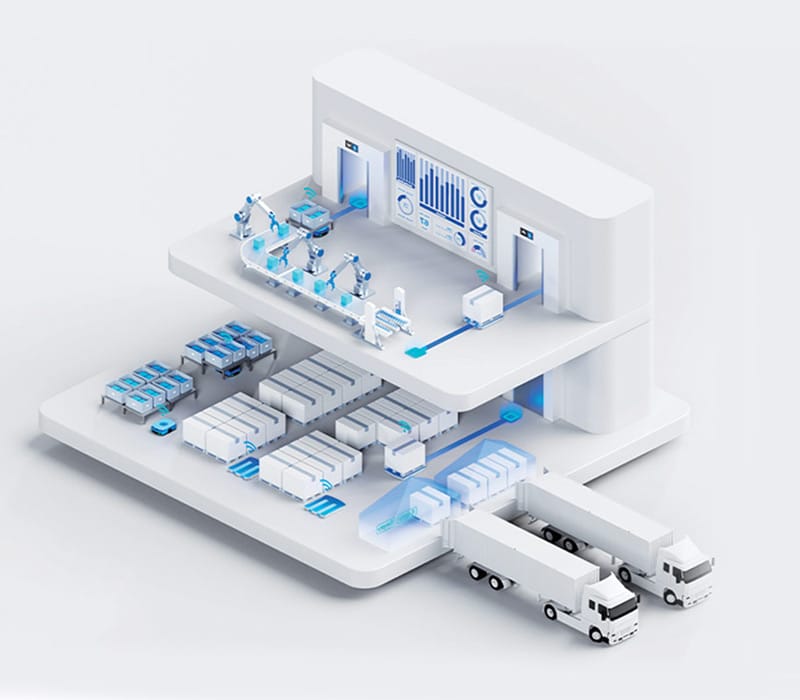
Full-stack intelligent logistics management and control system
It connects the entire "system - platform - hardware" chain, is compatible with mainstream industrial systems, and links intelligent hardware to achieve intelligent management and efficiency upgrades for the entire logistics process.
WHAT FITS:
Building core competitiveness in mobile management
01.
Custom Data Dashboard

Building core competitiveness in mobile management
02.
Personalized User Management

Building core competitiveness in mobile management
03.
Personalized Alarm Push

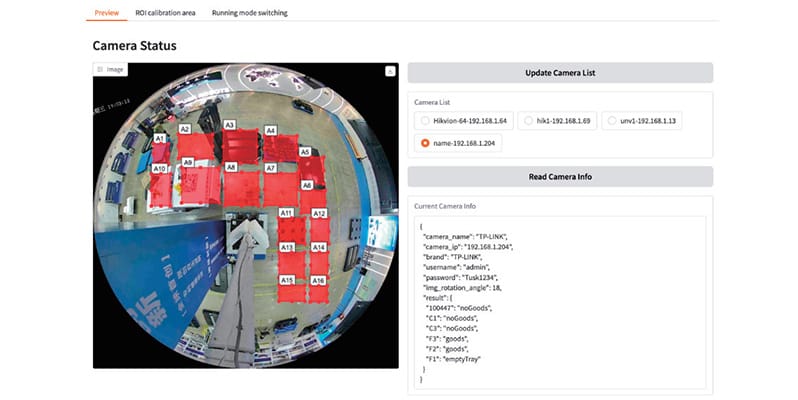
Leading the revolution in intelligent
warehouse location management
01.
Real-time storage location automatic trigger task

Leading the revolution in intelligent
warehouse location management
02.
Visual configuration interface
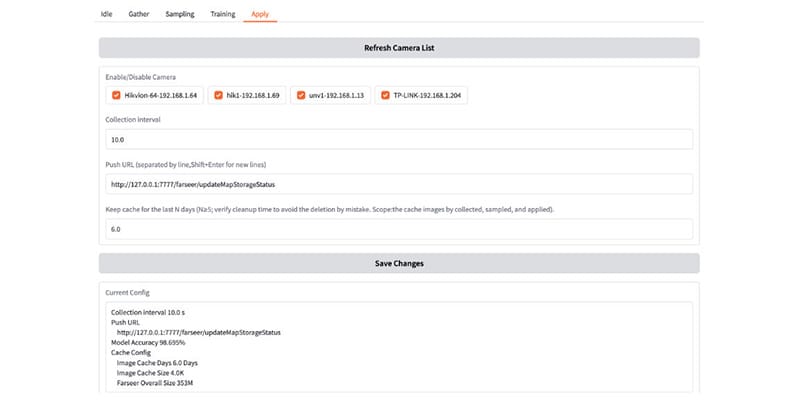
Leading the revolution in intelligent warehouse location management
03.
Custom Configuration
Lothar Intelligent Management Platform Building a Central System for Smart Factories
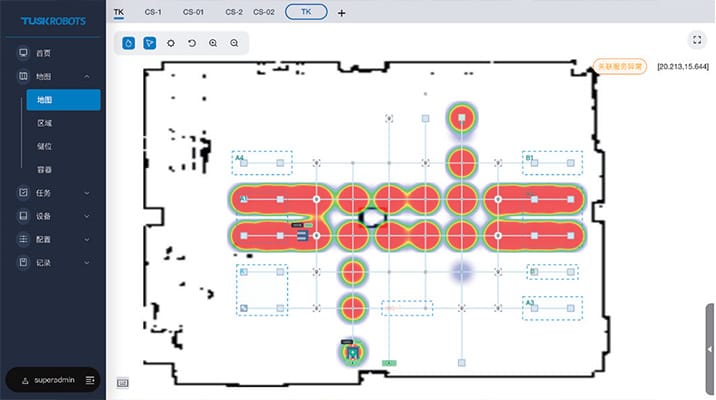
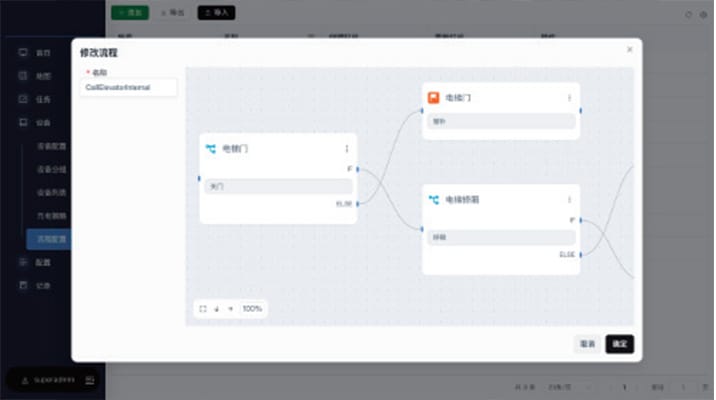
Lothar, the intelligent management platform from Taskar, serves as the digital hub for smart factories. It features customizable data dashboards, full-dimensional map visualization, graphical task and equipment workflows, simulation capabilities, AI-powered operation and maintenance, open multi-protocol interfaces, and OTA upgrade support, empowering digital management of factories throughout their entire lifecycle.
Map Management
Configuration Management
Access Management
Task Management
Historical records
Equipment Management
Simulation
Data dashboard
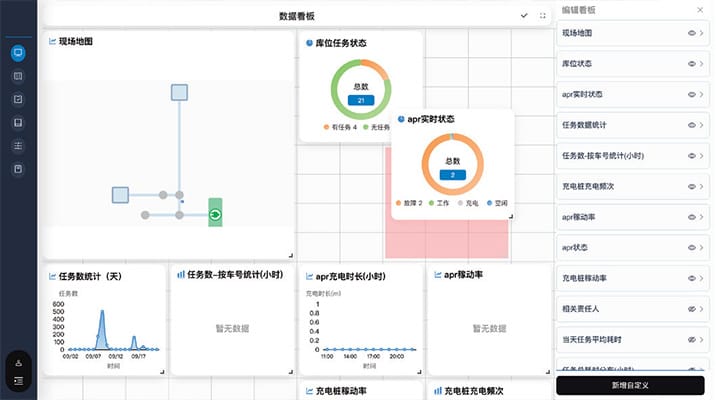
01.
Custom Data Dashboard
02.
Map visualization

03.
Graphical construction task
04.
Graphical device configuration process

05.
Simulation visualization

06.
O&M Visualization
Trust Witnessing in Smart Factory Automation
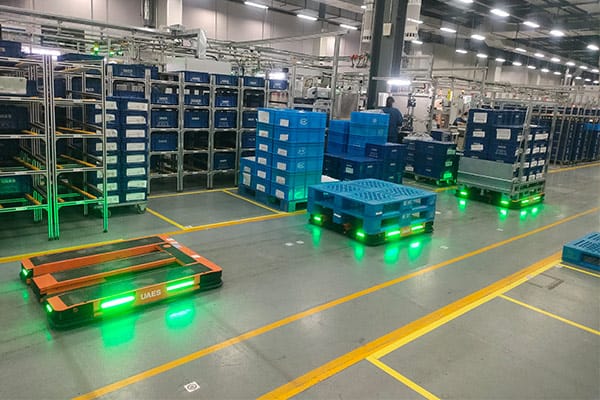
Electronics Industry
The automotive electronics trend makes digital pallet robots the preferred choice for in-plant logistics.
Solution
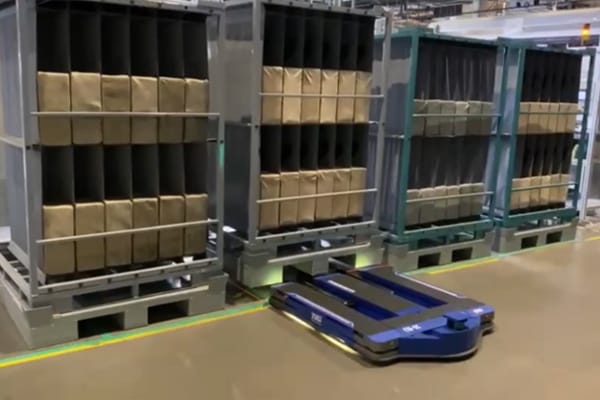
Auto Parts Industry
Rising demand for automotive interiors propels suppliers to new heights of development.
Solution
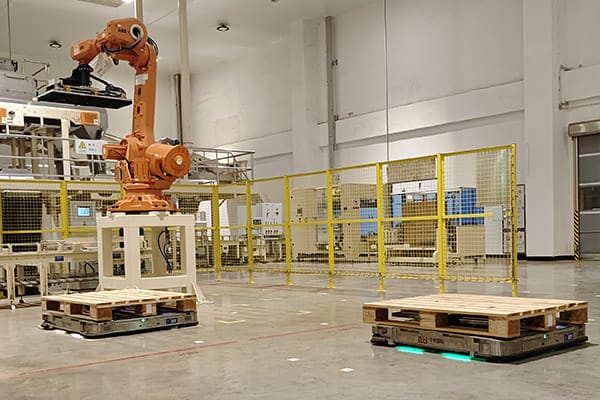
Tobacco Industry
A backbone of China's tobacco industry, with over forty years of history.
Solution
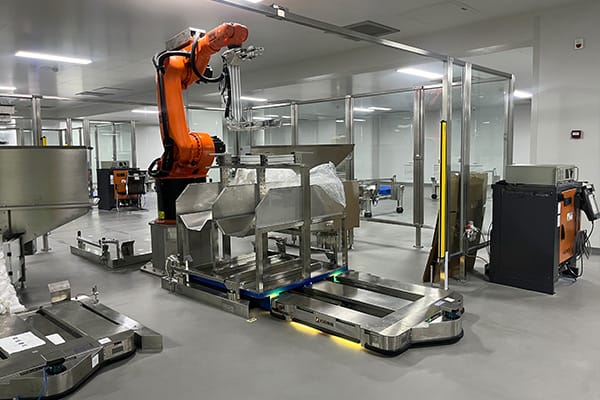
Pharmaceutical Industry
The pharmaceutical industry needs automation due to GMP requirements.
Solution
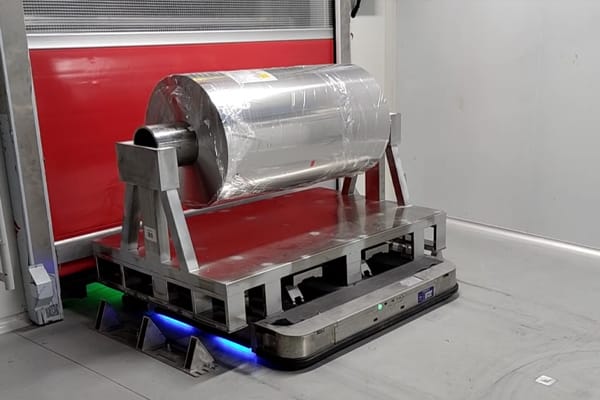
New Energy Industry
New energy lithium battery production capacity increases, automation is key.
Solution
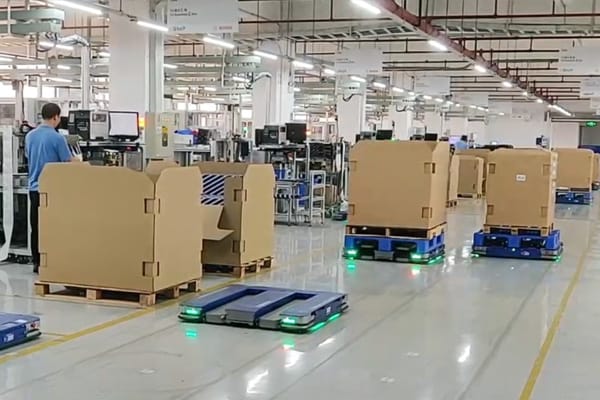
Manufacturing Industry
A globally renowned manufacturer of wiper parts, with a factory of 30,000 square meters.
Solution
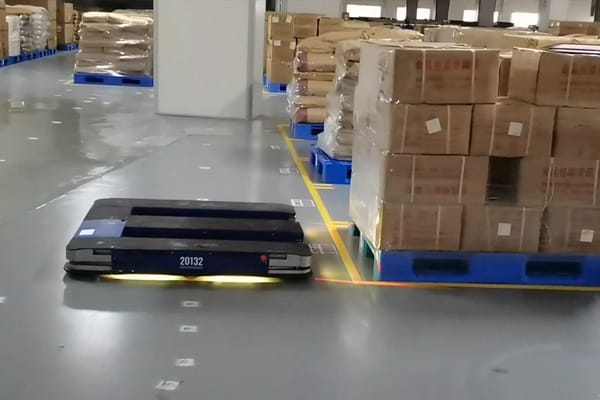
Food Industry
Positioned as a high-quality chain bakery brand, with a modern industrial park of over 60,000 square meters.
Solution
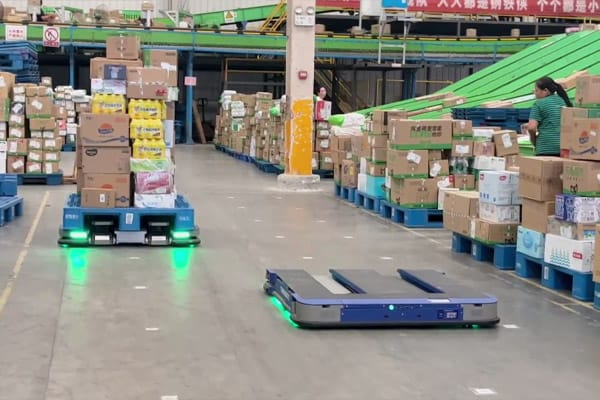
Logistics Industry
South China Logistics and Distribution Center of a Major Domestic E-commerce Company
Solution
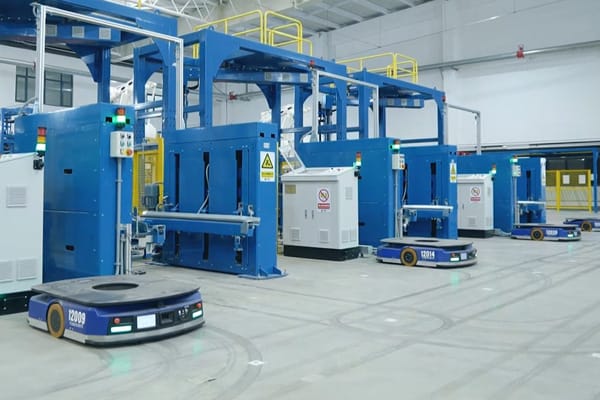
Paper Industry
The group is a leading enterprise in the domestic household paper and maternal and child hygiene products industry.
Solution
Smart Factory Automation Trust
Explore more industry automation transformation paths; click to unlock customized solutions.
Smart Device Project Implementation
Implementation Preparation
Robot/charging station parts inventory: on-site inspection of wiring, access control, network, and power supply.
Project on-site implementation
Line marking and coding, map creation and permission setting, software and hardware debugging / robot test run
Launch and Support
User training / Deployment and trial run, manual / maintenance training, acceptance signing, after-sales support